
Your info portal
Europa News für Schleswig-Holstein
Europe in SH
Europe can be felt by the citizens of Schleswig-Holstein on a daily basis. But it goes far beyond the euro. What does the European Union mean for Schleswig-Holstein? Quite a lot: Schleswig-Holstein benefits directly from the advantages of open borders in the Schengen area, and companies profit from the European single market. Schleswig-Holstein also makes use of the European funding programmes and received almost 360 million euros in the last funding period in the economic sector alone.
SH in Europe
The EU influences the daily lives of people in Schleswig-Holstein. At the same time, Schleswig-Holstein is also present in Brussels: through the Committee of the Regions and the Hanseatic Office, among others, the interests of the citizens of Schleswig-Holstein are directly involved in European politics and contacts are maintained with European institutions. This ensures that Schleswig-Holstein's interests are taken into account in the decision-making processes at European level.
General & political
TOP topics
our blog
Europe News
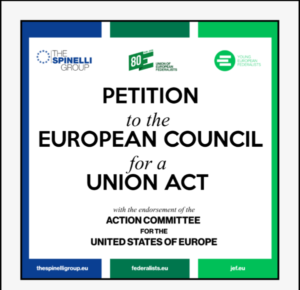
80 Jahre Europa-Union Deutschland
– 80 Jahre Einsatz für Europa
Ein Europa, geprägt von Frieden, Zusammenarbeit und gemeinsamen Werten. Was heute selbstverständlich erscheinen mag, war vor 80 Jahren kaum mehr als eine kühne Vision. Geprägt von den Erfahrungen des Zweiten Weltkriegs und der Erkenntnis, dass sich eine solche Katastrophe niemals wiederholen dürfe, kamen im September 1946 Föderalistinnen und Föderalisten aus 14 Ländern im schweizerischen Hertenstein zusammen, mit dem Willen zu einem gemeinsamen Neuanfang. Sie formulierten im Hertensteiner Programm die Grundsätze einer europäischen Föderation.
Auch in Deutschland fand diese Idee Anhänger. Noch im selben Jahr schlossen sich engagierte Europäerinnen und Europäer zur Europa-Union Deutschland zusammen. Was sie verband, war die Überzeugung, dass Frieden in Europa nur durch Zusammenarbeit und den Willen, nationale Grenzen zu überwinden, entstehen kann. Seit nunmehr 80 Jahren trägt der Verband diese Idee in die Gesellschaft und setzt sich als größte Bürgerinitiative für eine verstärkte europäische Integration sowie für ein friedliches und föderales Europa ein.
Read more
Das 80-jährige Jubiläum der Europa-Union Deutschland fällt in eine Zeit, in der Europa vor neuen Bewährungsproben steht, sowohl von außen als auch von innen. Wie ernst die Lage ist, wurde auch beim 69. Bundeskongress der Europa-Union Deutschland am 24. und 25. Oktober in Königswinter deutlich. Unter dem Motto „Zukunft braucht Europa“ kamen Delegierte und Gäste aus ganz Deutschland zusammen, um über die Zukunft Europas und darüber zu diskutieren, wie der Verband den wachsenden Herausforderungen unserer Zeit mit seiner Arbeit begegnen kann.
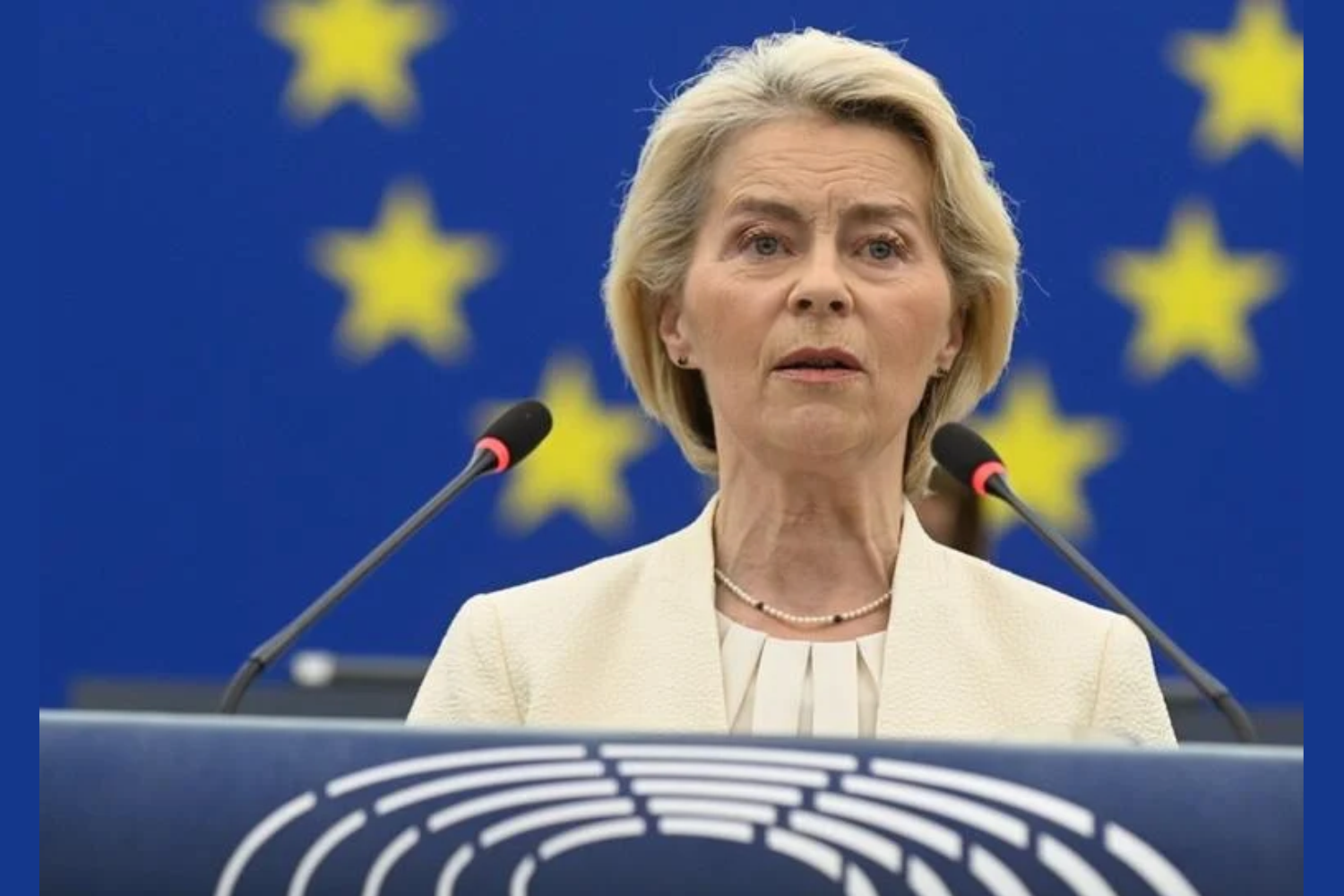
Andrea Wechsler, MdEP und Präsidentin der Europa-Union Deutschland, fand deutliche Worte: „Es geht um die Frage, ob Europa zusammenbleibt oder ob nationalistische Kräfte den Kontinent auseinandertreiben“, warnte sie. „Unsere Antwort darf nicht weniger Europa sein, sondern mehr Europa. Unsere Freiheit und Sicherheit lassen sich nicht im nationalen Alleingang schützen, sondern nur europäisch.“
Damit die EU den Herausforderungen der Zukunft geschlossen und souverän begegnen kann, sehen die Delegierten Reformbedarf bei ihren politischen Entscheidungsstrukturen. Weniger nationale Blockademöglichkeiten, mehr Entscheidungen mit qualifizierter Mehrheit und ein stärkeres Europäisches Parlament sollen den Weg zu einer handlungsfähigeren Union ebnen. Die langfristige Perspektive: die Vereinigten Staaten von Europa.
Vieles, wofür die föderalistische Bewegung über Jahrzehnte geworben hat, ist heute Realität eines ganzen Kontinents. Doch die europäische Einigung ist mehr als das Ergebnis politischer Entscheidungen. Sie lebt vom Engagement der Bürgerinnen und Bürger, von Initiativen und Organisationen, die europäische Ideen in die Gesellschaft tragen und Entwicklungen von unten mitgestalten.
Und sie wird auch künftig Menschen brauchen, die bereit sind, die nächsten Kapitel mitzuschreiben.




HIghlights
Our blog


Europe in the present
Policy areas
Rural areas
Rural areas are home to the majority of small and medium-sized enterprises in Germany. In Schleswig-Holstein, around 78 per cent of the population live in rural areas. These areas have been facing profound structural change for years. Economic and political players as well as the rural population are faced with the major challenge of developing their rural regions in a sustainable and attractive manner, particularly against the backdrop of increasing market globalisation and demographic change.
European education
The understanding and participation of young people play a decisive role in the growing together of Europe. This is why European education is of particular importance in Schleswig-Holstein's political education work. In addition to the State Commissioner for Political Education, the Association of European Schools, the EU Project Day at Schools and the European Competition, the Europa-Union Schleswig-Holstein also plays a special role here.
Labour & Social Affairs
More than half of Schleswig-Holstein's exports are delivered to countries in the European Union, the majority to Denmark. The European single market facilitates this trade considerably. People in the border region also benefit from the freedoms of the Schengen area, which enables them to work or shop in neighbouring countries with little effort. The European Social Fund (ESF) contributes almost 89 million euros to the financing of the state's work programme.
Economy
Schleswig-Holstein favours investment, innovation and sustainability. Right in the heart of Europe, directly on the most important north-south transport axis to Scandinavia and with direct access to the North and Baltic Seas, Schleswig-Holstein is also an important transport hub to Northern and Eastern Europe and the Baltic States. Its proximity to Hamburg also provides fast access to German and global markets on all transport routes.
Environment
Prosperity and health for all in Schleswig-Holstein and Europe - this requires a healthy, intact and diverse environment. However, climate change does not stop at national borders. This is why the EU Commission has developed a joint European strategy (European Green Deal) to meet the challenges of climate change. Schleswig-Holstein's diverse nature and sensitive ecosystems will also benefit from this.
Youth
Children and young people are our future. The state of Schleswig-Holstein is committed to ensuring that young people have the freedom they need to develop their personalities independently and critically. In the form of the EU-funded Erasmus programme, young people have the opportunity to take part in a Europe-wide exchange. The fact that young people are already politically active is also demonstrated by the youth organisation of the Europa-Union Schleswig-Holstein: the Young European Federalists.
Knowledge & History
FAQ about the EU
When is Europe Day?
In memory of the Schuman Declaration of 9 May 1950, ‘Europe Day’ is celebrated every year on 9 May. The Schuman Declaration is regarded as the ‘birth certificate’ of today's EU, as it led to the founding of the European Coal and Steel Community.
How are the President of the Commission and its members appointed?
The European Parliament elects the President of the Commission using the lead candidate procedure introduced in 2014. Member States nominate candidates who must be confirmed by the Parliament. There are also hearings for Commissioners. The Parliament must confirm the entire Commission before the European Council officially appoints it. Renewed hearings are required in the event of changes.
Which country was the last to join the EU?
On 1 January 2013, Croatia became the 27th country to join the Schengen area.
Which languages are used in Parliament?
Since the accession of Croatia in 2013, the EU has had 24 official languages to enable citizens to understand and participate. The work of interpreters and translators enables communication in 552 possible language combinations. Around 270 civil servant interpreters and 600 translators are employed, supported by external experts.
How many member states does the EU have?
27, since the UK's withdrawal (Brexit) on 1 February 2020.
What makes the EU so special?
The EU has ensured peace, stability and prosperity for over half a century. It also plays a crucial role in diplomacy and champions these values worldwide, as well as democracy, fundamental rights and the rule of law.
Are the Canary Islands part of the EU?
Yes, the Canary Islands are part of the EU because they belong to Spain, which is a member of the EU. Article 299 of the EC Treaty states: ‘This Treaty shall apply to the French overseas departments, the Azores, Madeira and the Canary Islands.’ The French overseas departments are the islands of Réunion, Guadeloupe and Martinique as well as French Guiana; parts of the Caribbean archipelago are therefore also part of EU territory.
Which are the founding countries of the European Union?
Germany, France, Italy, the Netherlands, Belgium and Luxembourg founded the European Coal and Steel Community (ECSC) in 1951, which later became the European Union.
Why does Parliament move back and forth between Brussels and Strasbourg?
The EU member states unanimously agreed on the permanent seats of the EU institutions in 1992. The Parliament meets mainly in Strasbourg, while committees meet in Brussels and the Secretariat-General is based in Luxembourg. The relocation to Brussels could save EUR 103 million per year, while Strasbourg currently incurs additional costs of EUR 109 million.
Is there a European anthem?
Yes, since 1986 the EU has used the ‘Hymn to Europe’ or ‘Ode to Joy’ from the last movement of Beethoven's 9th Symphony as a musical symbol of recognition. The EU anthem does not replace the national anthems of the EU member states.
What is Schengen?
The Schengen area began in 1985 as a project between France, Germany, Belgium, the Netherlands and Luxembourg and has developed into the world's largest area for the free movement of persons. Participation in an area without internal border controls means that the countries (1) do not carry out internal border controls, except in the case of specific threats, and (2) carry out harmonised controls at their external borders based on precisely defined criteria. The set of rules for the Schengen area is the Schengen Borders Code. The set of rules for the Schengen area is the Schengen Borders Code.
Is Norway a member of the EU?
Norwegen ist nicht Mitglied der EU, arbeitet jedoch eng mit ihr zusammen. Ursprünglich hatte Norwegen 1962 die EG-Mitgliedschaft angestrebt. Aufgrund der ablehnenden Haltung des damaligen französischen Präsidenten Charles de Gaulle gegenüber einer britischen EG- Mitgliedschaft waren aber die Verhandlungen mit sämtlichen Bewerbern (Großbritannien, Irland, Dänemark und Norwegen) zum Erliegen gekommen. Später führte Norwegen zweimal Beitrittsverhandlungen mit der EU und unterzeichnete Beitrittsverträge, die jedoch von der norwegischen Regierung nicht ratifiziert werden konnten. Bei den Referenden zum EU-Beitritt stimmte die Mehrheit der Wähler jedes Mal dagegen.
What is the Schumann Declaration?
Die Schuman-Erklärung ist ein Text, der am 9. Mai 1950 vom damaligen französischen Außenminister Robert Schuman vorgelegt wurde. Sie gilt als „Geburtsurkunde“ der heutigen EU, da sie zur Gründung der Europäischen Gemeinschaft für Kohle und Stahl führte. Im Wesentlichen handelte es sich dabei um einen Vorschlag zur Schaffung eines vereinten Europas, in dem enge wirtschaftliche Verbindungen friedliche Beziehungen zwischen den Ländern gewährleisten.
What is the European Parliament's role in drawing up the EU budget?
The European Parliament and the Council jointly adopt the annual EU budget, which may not exceed the multiannual financial framework. Parliament monitors expenditure, scrutinises the annual accounts and makes recommendations on budget management, including discharge for institutions and agencies.